
NDIS Respite Care in Victoria: A Complete Guide to Short Term Accommodation
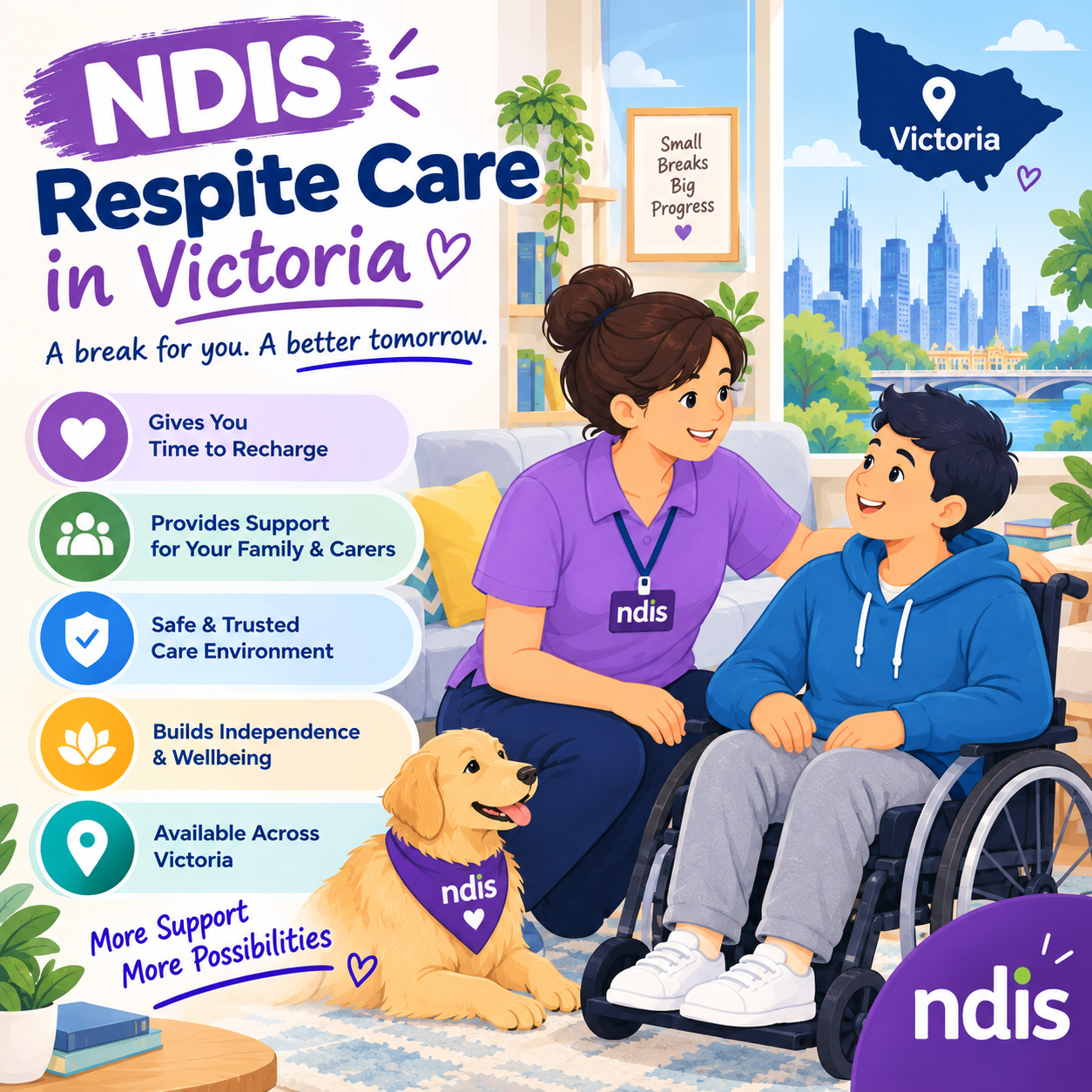
Caring for someone every day is rewarding, but it’s also demanding — and every carer needs a break sometimes. That’s exactly what NDIS respite care is designed for. If you’re a participant, family member, or carer in Victoria trying to understand how respite works under the NDIS, this guide covers what it actually is, what changed recently, what it covers, and how to access it.
What Is NDIS Respite Care?
Respite care gives participants short-term, out-of-home support so their regular carers — often family members — get a break, while the participant still receives the personal care, supervision, and activities they need. Historically, the NDIS called this support “Short Term Accommodation (STA).”
Important update: As of October 2025, the NDIS officially renamed Short Term Accommodation to “Short Term Respite (STR).” It’s the same support — the name change simply reflects the actual purpose: giving both participants and their informal carers a genuine break. You’ll still see “STA” used widely across provider websites and older NDIS documents, so it’s worth knowing both terms mean the same thing.
What Does NDIS Respite / STA Cover?
Short Term Respite is funded from your Core Supports budget and generally covers:
- Accommodation for a short stay away from home
- Personal care and daily support during that stay
- Food and meals
- Planned activities and, where relevant, community participation
Support is often delivered in a group setting, though 1:1 support can be arranged where a participant’s needs require it.
Types of NDIS Respite Care
Respite looks different for every family. The right option depends on your needs, your goals and what feels comfortable.
- In-home respite. A support worker stays with you in your own home, so your routine stays the same while your family takes a break.
- Group respite houses. You stay in a shared home with a few other participants and enjoy company, outings and group activities.
- One-on-one respite. You stay somewhere with your own dedicated support worker. This suits people who prefer quiet or need close support.
- Respite with complex care. If you have high health needs, your provider can include NDIS community nursing care in your stay.
- Emergency respite. If your carer suddenly becomes unwell or unavailable, some providers can arrange a stay at short notice.
Many families mix these options across the year. For example, you might book one weekend a month plus a longer stay during school holidays.
How Many Days of Respite Am I Entitled To?
The NDIS generally funds up to 28 days of Short Term Respite per year, which can be used as one continuous block (commonly referenced as up to 14 days at a time) or spread across shorter stays — for example, a weekend once a month. The exact amount depends on what’s included in your individual plan, so it’s worth checking your plan documents or asking your support coordinator for your specific allocation.
Who Is Eligible for NDIS Respite Care?
You’re generally considered for Short Term Respite / STA funding if:
- You have informal carers or family who provide regular, ongoing support.
- The support relates to your disability-related needs and goals.
- It represents reasonable and value-for-money use of your NDIS funding.
One common myth worth clearing up: Short Term Respite is not intended for holidays. The NDIS is explicit about this — funding is for disability-related support and a genuine break for carers, not a subsidised getaway. Since late 2025, providers also face stricter invoicing requirements to make sure claims reflect actual support delivered, not holiday-style stays.
Need a break, or planning ahead for one?
United Tribe provides warm, person-centred Short-Term Accommodation / Respite support across Victoria, alongside personal care and daily living support. Submit an online referral and our local team will talk through what fits your situation.
How to Get Respite Funding Into Your NDIS Plan
The NDIS short term respite page says you may qualify if you:
- Live with your main informal supports, such as family, friends or a carer
- Get daily drop-in support from the people you live with
- Get more than 6 hours of disability-related support a day from those informal supports
Getting it into your plan. Talk to your my NDIS contact, planner or support coordinator. Explain how much care your family gives and why a break matters. Letters from your GP, therapists or carers can make your case stronger.
Where the funding sits. Most plans fund respite from the Core Supports budget, under Assistance with Daily Life. You can use it flexibly, as a long block or as short stays spread across the year.
How to Access NDIS Respite Care in Victoria
- Check your NDIS plan to confirm Short Term Respite / STA funding is included under Core Supports.
- Talk to your support coordinator or plan manager, if you have one, about how much funding is available and how it’s best used.
- Reach out to a provider — share your situation, preferred timing, and any specific needs (personal care level, activities, location).
- Plan ahead where possible. Respite stays, especially popular dates, can book out — organising early gives you and your carer more flexibility.
Participants, family members, support coordinators, plan managers, and allied health professionals can all make a referral on behalf of someone needing respite support.
How to Plan a Respite Stay That Works
A little planning turns respite from a stressful change into something everyone looks forward to.
- Start with goals. Decide what you want from the stay. It might be rest for your carer, new friends or a new skill.
- Book early. Popular times, such as school holidays and Christmas, fill quickly.
- Share the details. Give your provider your routines, medication list, likes, dislikes and emergency contacts.
- Try a short visit first. A day visit or one night helps you settle in before a longer stay.
- Pack familiar things. A favourite pillow, photos or music can make a new place feel like home.
- Check in afterwards. Talk about what went well and what to change next time.
Good providers help with each step, so you never have to plan alone.
How to Choose an NDIS Respite Care Provider
You are trusting a provider with someone you love, so ask plenty of questions:
- Are your workers screened and trained? Every worker should hold a current NDIS Worker Screening Check.
- Can I visit before booking? A good provider welcomes tours and trial visits.
- How do you match workers to participants? The right match makes the stay feel safe and friendly.
- What activities do you offer? Respite should feel like a break, not a waiting room.
- Can you support complex needs? Ask about medication, mobility, behaviour support and nursing care.
- How will you keep us updated? Clear communication gives carers real peace of mind.
You can also check a provider’s registration through the NDIS Quality and Safeguards Commission.
Why Respite Matters for Carers Too
It’s easy to think of respite purely as a service for the participant, but it exists just as much for the carer. Regular, planned breaks help prevent carer burnout, protect relationships at home, and — often — make day-to-day caring more sustainable long-term. If you’re an informal carer supporting a family member, the Carer Gateway is a helpful, complementary federal resource alongside your NDIS-funded respite support.
Frequently Asked Questions
Is Short Term Accommodation (STA) the same as respite care?
Yes. As of October 2025, the NDIS renamed Short Term Accommodation to Short Term Respite (STR) — it’s the same support under a new name that better reflects its purpose.
How many days of NDIS respite am I entitled to?
Most plans allow for up to 28 days per year, though the exact amount depends on your individual NDIS plan. Check with your support coordinator or plan manager for your specific allocation.
What budget does NDIS respite come from?
Short Term Respite / STA is funded through your Core Supports budget.
Can I use NDIS respite funding for a holiday?
No. The NDIS is clear that Short Term Respite is for disability-related support and genuine carer relief, not holidays or general leisure travel.
Who can arrange NDIS respite care?
Participants, family members, carers, support coordinators, plan managers, and allied health professionals can all request or arrange respite support on a participant’s behalf.
How do I find NDIS respite care near me in Victoria?
Look for a local Victorian provider with experience in short-term accommodation, check what’s included in their support (personal care, activities, staffing ratios), and reach out early to plan around your preferred dates. See United Tribe’s FAQs for more on how referrals work.
Can I have respite at home?
Yes. A support worker can stay with you at home while your family takes a break.
Can children use NDIS respite care?
Yes. Children who meet the criteria can use respite, and many providers offer child-friendly stays.
How far ahead should I book?
Book as early as you can, especially for school holidays and public holidays.
What should I pack for a respite stay?
Pack clothes, medication, personal care items and a few familiar things from home.
Final Thoughts
NDIS respite care — now officially Short Term Respite — exists to support both participants and the people who care for them every day. Understanding what’s covered, how much funding you have, and how to access it makes it far easier to plan ahead rather than scrambling when a break is needed urgently.
Ready to arrange respite support in Victoria? Learn more about United Tribe or submit an online referral today. Prefer to ask questions first? Contact our team — we’re happy to talk through what would work best for you and your family.
One Response