
NDIS Provider Near You: Support Workers, Respite Care and More
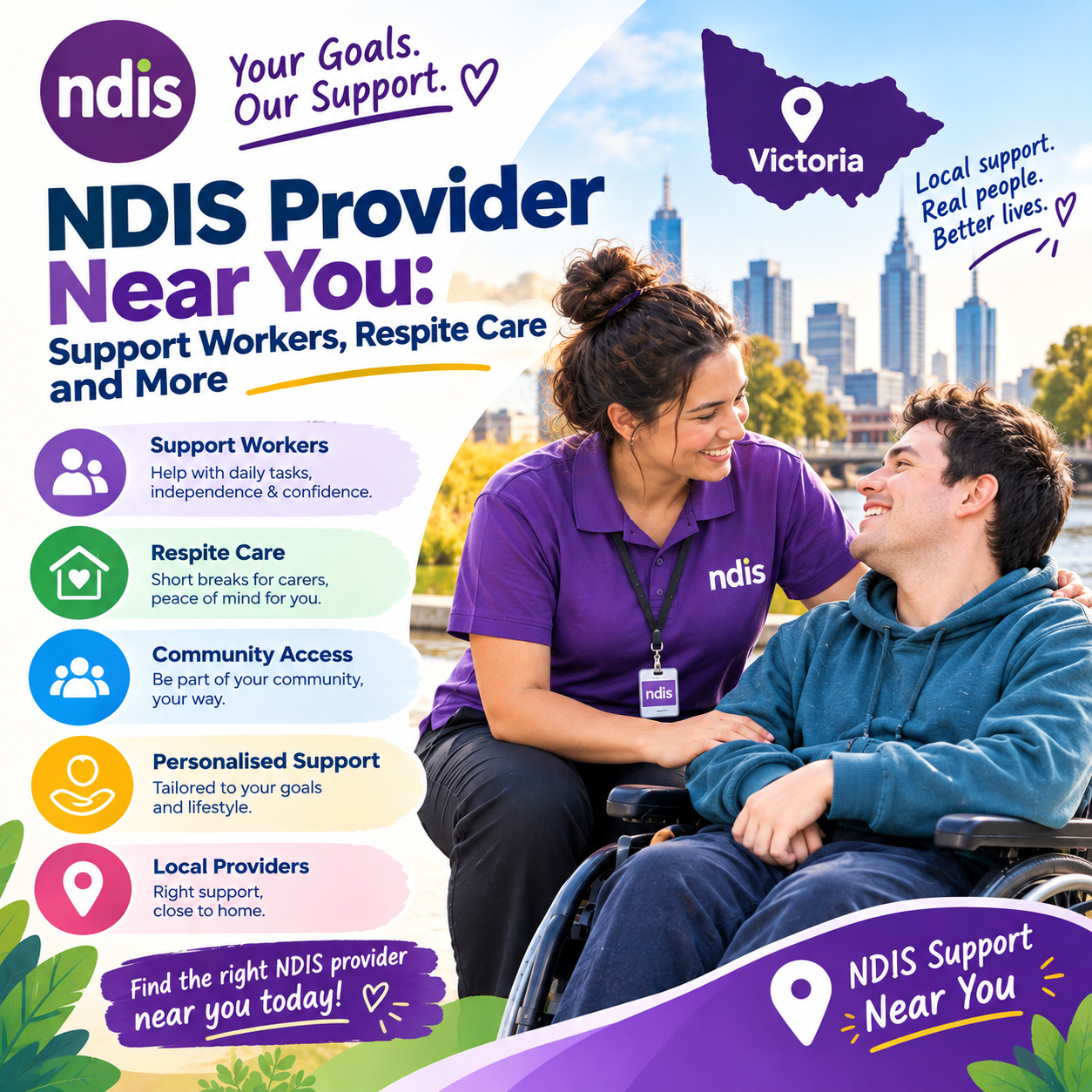
Typing “NDIS provider near me” into Google usually means one of two things. Either you are new to the Scheme and trying to work out where to even start, or you already have a plan and the current setup is not quite working out. Either way, the search results rarely explain what a support worker actually does, what community participation covers, or when respite care makes sense. This guide breaks all of that down in plain language, using the real questions people ask before they make a referral.
The demand behind that search is real and growing. As at 30 June 2026, the NDIS supported 782,013 participants across Australia, and Victoria alone accounted for more than 208,000 of them. That growth has put real pressure on the workforce behind the Scheme, with industry forecasts pointing to a shortfall of around 285,000 care and support workers nationally by 2050. In practice, that means the difference between an average provider and a great one often comes down to whether they have invested in finding and keeping good people, rather than filling rosters as quickly as possible.
None of this needs to feel complicated from where you are sitting. Most people searching for a provider just want three questions answered clearly: who will actually turn up, what support looks like day to day, and how quickly someone will get back to them. The rest of this guide works through those questions one section at a time, starting with what a local provider does differently from a large national call centre operation.
What an NDIS Provider Near You Actually Does
A local NDIS provider is the organisation that delivers the day to day support written into your plan. That can mean a support worker visiting your home, help getting to appointments, or a hand with the household tasks that are harder to manage on your own. The word “near you” matters more than people expect. A provider based in your area understands local transport routes, local community groups, and the practical realities of your neighbourhood, rather than coordinating everything from a call centre interstate.
Choosing local also affects how quickly things move. A nearby team can usually meet you in person before support starts, respond faster when your circumstances change, and match you with a support worker who already knows the area. It also makes ongoing communication easier. Rather than working through a rotating call centre roster, you deal with the same coordinators and support workers over time, which tends to make small adjustments to a plan far less stressful than starting the conversation from scratch every time.
If you want to understand how a provider works before reaching out, it helps to read about their approach and values first, then get in touch with our team with any questions. A short conversation before anything is locked in is a reasonable thing to expect from any provider you are considering.
NDIS Support Workers: What They Do, and Why the Right Match Matters
“NDIS support worker” is the single most searched term in this space, and for good reason. The support worker is the person you will actually spend time with, so the relationship matters as much as the qualification. A good support worker listens first, follows your routine rather than a generic checklist, and adjusts as your goals change.
Support workers can assist with personal care, transport, household tasks, community access, and more, depending on what is in your plan. The best providers do not just assign whoever is available. They take time to understand your personality, communication style, and preferences, then match you with someone who is a genuine fit, rather than treating the introduction as a formality.
That matching process is where many participants say a previous provider let them down. A support worker who does not understand your routine, or who changes every few weeks, makes it hard to build the kind of trust that good support depends on. Continuity matters just as much as skill. If personal care is part of what you are looking for, our personal care page explains how that support is delivered with privacy and dignity front of mind.
NDIS Support Categories at a Glance
| Support Category | What It Covers | Best For |
| Core Supports | Everyday practical help across several areas | Participants who need broad, flexible day to day support |
| Community Participation | Getting out, connecting with people, joining activities | Participants building social connection and independence |
| Personal Care | Hygiene, dressing, mobility, daily routines | Participants who need hands on daily support |
| Short Term Accommodation and Respite | Temporary stay away from home, often with support | Participants and carers who need a planned break |
| Transport Assistance | Getting to appointments, activities and community events | Participants without independent transport options |
Community Participation: Support Built Around Your Life
“NDIS community participation” covers far more than group outings. It is support that helps you take part in the things you already care about, whether that is a sports club, a place of worship, a TAFE course, or simply catching up with friends regularly. Good community participation support starts by asking what you actually enjoy, not by offering a fixed list of scheduled activities.
This kind of support also matters for independence over the long term. Being part of a community builds confidence, routine and a wider circle of people around you, which is often just as valuable as any single service. A support worker who takes part in community participation with you should feel more like a familiar companion than a supervisor, present enough to help when needed and comfortable stepping back when you want to manage a situation yourself.
Getting this right usually takes a conversation up front about what genuinely interests you, followed by a willingness to adjust as your interests change over time. You can see how this looks in practice on our community participation page.
Short Term Accommodation and Respite Care: Support When You Need a Break
“NDIS short term accommodation” and “NDIS respite care” are searched together because they solve a similar problem from two directions. Short term accommodation gives a participant a planned stay away from home, sometimes to build new skills in a different setting, sometimes simply for a change of pace. Respite care gives family members and carers a genuine break, knowing their loved one is supported and comfortable the whole time.
Neither should feel like an emergency measure. The most effective approach treats short term accommodation and respite as a normal, planned part of a support routine, not something arranged only in a crisis. Planning ahead also gives everyone involved time to prepare properly, from confirming who will be present during the stay to making sure routines, medication schedules and personal preferences are understood before the participant arrives.
Families often find that a single positive respite experience changes how they think about asking for help going forward. Instead of feeling like a last resort, it becomes a normal part of managing energy and wellbeing for everyone in the household, not just the participant. Details on how this works, including what to expect during a stay, are covered on our short term accommodation and respite page.
A provider you can trust with this kind of support usually shows a few consistent signs:
- They explain exactly who will be present and what a typical day looks like before you agree to anything.
- They check in with both the participant and the family afterwards, not just at the start.
How to Choose the Right NDIS Provider Near You
With so many providers listing similar services, the real differences show up in how they communicate and how quickly they respond. Before committing to a provider, it is worth asking how they match support workers, how they handle a request to change support, and how fast they typically reply to a new enquiry. Providers like United Tribe are built around answering those questions clearly before a participant ever signs up, rather than leaving the details for later.
It also helps to know who else can be involved in getting support started. A referral to a local provider can come from:
- The participant themselves, or a family member or carer acting on their behalf.
- A support coordinator, plan manager, hospital or allied health professional already involved in the person’s care.
Once a referral is in, most reputable providers will follow up with a conversation before anything is locked in, so there is no pressure to commit before you are ready.
Frequently Asked Questions
How do I find an NDIS provider near me?
Search for providers operating in your local area, then check whether they are registered with the NDIS Quality and Safeguards Commission if your plan requires a registered provider. From there, a short conversation usually tells you whether the team and the participant are a good fit.
What does an NDIS support worker actually help with?
Support workers can assist with personal care, household tasks, transport, and community participation, depending on what is funded in your plan. The specific mix is built around your goals and routine, not a fixed template.
Is respite care only for emergencies?
No. Respite care works best when it is planned in advance as a regular part of a support routine, giving carers a reliable break rather than something arranged only when things become unmanageable.
Can a support coordinator refer someone on my behalf?
Yes. Support coordinators, plan managers, hospitals and allied health professionals can all make a referral, alongside the participant or their family. You can read more on our FAQs page.
Ready to Find Support That Fits?
United Tribe is a Victorian NDIS provider built around exactly the questions covered in this guide: matching the right support worker, planning community participation around your actual interests, and making respite and short term accommodation feel like a normal part of good support rather than a last resort. If you are ready to take the next step, submit an online referral and our team will be in touch to talk through what support could look like for you.