
NDIS Community Nursing Care: Skilled Nurses and High Intensity Support, Right at Home
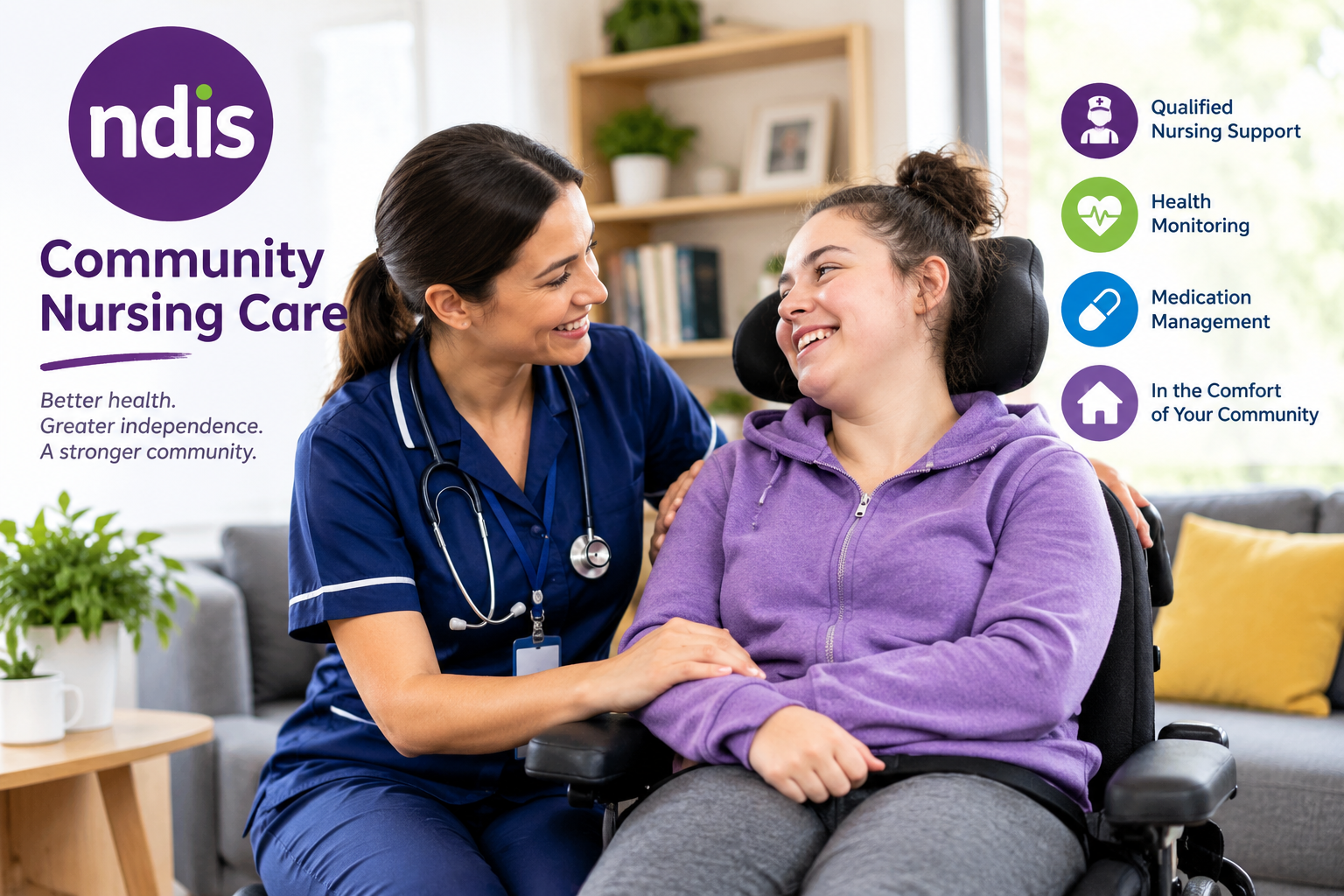
Nursing support that comes to you
NDIS community nursing care brings a qualified nurse into your home or community. You get clinical care without long hospital visits or waiting rooms. For many people with disability, this support makes daily life safer and more independent.
Some people also need NDIS high intensity support. This covers complex daily tasks, such as tube feeding or catheter care, that need extra skill and training. Nurses and trained support workers often deliver these two supports side by side.
This guide explains what each support covers, who can use it, and how to fund it through your NDIS plan. It also shares what to look for in a provider you can trust.
What is NDIS community nursing care?
NDIS community nursing care is clinical support that a registered nurse or enrolled nurse provides outside a hospital. It helps people whose disability creates ongoing health needs. The nurse comes to your home, your day program, or another place you choose.
Common services include:
- Wound care and pressure injury management
- Catheter and continence care
- Medication management, including injections
- Enteral (tube) feeding care
- Tracheostomy and ventilation support
- Diabetes and seizure management plans
- Health checks and early warning of changes
A nurse does more than complete tasks. They assess your health, write a care plan, and adjust it as your needs change. They also train your support workers so your care stays consistent every day.
The NDIS funds nursing care when your needs relate directly to your disability. Your regular health system, such as your GP or hospital, still covers general health needs that anyone might have.
What is NDIS high intensity support?
NDIS high intensity support helps people with complex daily care needs. The NDIS calls these tasks high intensity daily personal activities. They need more skill than everyday personal care, but a trained support worker can usually handle them under a nurse’s guidance.
Examples include:
- Complex bowel care
- Enteral feeding through a PEG tube
- Severe swallowing difficulty (dysphagia) support
- Urinary catheter care
- Subcutaneous injections
- Complex wound care
- Epilepsy and seizure support
- Ventilation and tracheostomy support
The key difference is who does the work. A nurse handles tasks that need clinical judgement. A trained support worker handles high intensity tasks that follow a clear plan. Many people need both, and a good provider blends them into one smooth routine.
How nurses and support workers work together
The best care happens when your nurse and your support workers act as one team. Here is how that usually looks:
- Assessment. A nurse meets you, reviews your health and learns your goals.
- Care plan. The nurse writes a clear plan for each high intensity task.
- Training. The nurse trains your support workers and checks they can do each task safely.
- Daily support. Support workers follow the plan during everyday care.
- Review. The nurse visits often, updates the plan and steps in when your health changes.
This model gives you clinical safety without paying for a nurse at every shift. It also means you see familiar faces who know your routine.
Who needs this support, and how do you fund it?
These supports suit people whose disability brings ongoing health or care needs. That includes people living with:
- Spinal cord injury
- Acquired brain injury
- Cerebral palsy
- Multiple sclerosis or motor neurone disease
- Complex epilepsy
- Intellectual disability with complex health needs
Getting it into your plan. Tell your NDIA planner or local area coordinator about your daily health tasks at your planning meeting. Bring reports from your GP, specialist or allied health team. Clear evidence helps the NDIA see how these needs link to your disability.
Where the funding usually sits. Most plans fund both supports from the Core Supports budget, under Assistance with Daily Life. Your support coordinator or plan manager can confirm what your own plan covers.
If your needs change, you can ask the NDIA for a plan reassessment. You do not have to wait for your scheduled review.
How to choose the right provider
The right provider makes complex care feel simple. Ask these questions before you sign up:
- Are your nurses qualified and registered? Every nurse should hold current registration. You can check any nurse on the Ahpra register.
- How do you train support workers? Ask who trains them, how often, and how the nurse checks their skills.
- Can one team deliver both supports? A single team means fewer handovers and fewer gaps.
- Do you offer consistent staff? Familiar workers learn your routine and notice small changes early.
- How do you handle emergencies? A clear escalation plan protects your health.
- Will you work with my other supports? Good providers talk with your GP, therapists and family.
Trust your instincts too. You should feel heard, respected and in control of your own care.
Frequently asked questions
| Question | Answer |
|---|---|
| What is NDIS community nursing care? | It is clinical care from a registered or enrolled nurse at your home or in your community, linked to your disability. |
| What does NDIS high intensity support include? | It covers complex daily tasks such as tube feeding, bowel care, catheter care and seizure support. |
| Can a support worker do high intensity tasks? | Yes. A trained support worker can do many of them when a nurse writes the plan and checks their skills. |
| Do I need a referral? | You do not need a GP referral. Your plan must include funding, and health reports help you get it. |
| Where does the funding come from? | Most plans use the Core Supports budget, under Assistance with Daily Life. |
| Can I get nursing care at home? | Yes. Most community nursing happens at home, and nurses can also visit your day program or workplace. |
| What if my needs change? | Your nurse updates your care plan. You can also ask the NDIA for a plan reassessment at any time. |
Get the right care with United Tribe
Complex care should not feel complicated. At United Tribe, we build support around you, your goals and your daily routine. We help you understand your plan, match you with the right team and keep your care consistent.
Ready to talk about NDIS community nursing care or high intensity support? Contact United Tribe today, and let’s plan the support you deserve.