
A day in the life of a disability support worker: real examples of person-centred support
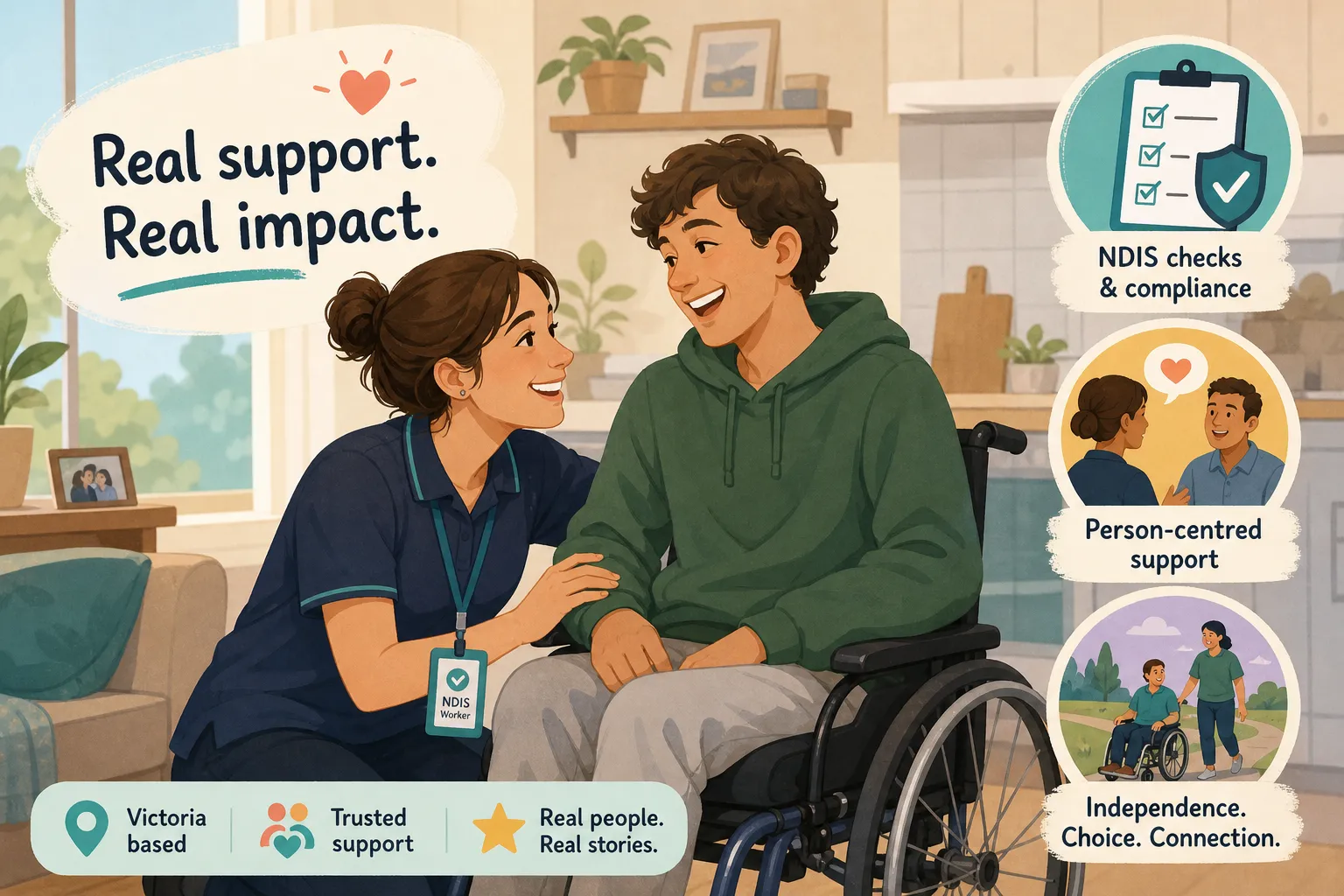
It’s 7:30am on a Tuesday in Melbourne’s outer suburbs. A disability support worker knocks on the door of a participant named Mia and waits a beat before entering, because she knows Mia needs a moment to feel ready for the day. She also knows Mia’s coffee goes on first, that the shower runs better warm than hot, and that there’s a community gardening group starting at 10am that Mia has been looking forward to all week. None of this is written in a formal care plan. It’s been learned through weeks of listening, noticing, and paying close attention.
That’s what person-centred support actually looks like. Not a checklist worked through at pace, but real, attentive care built around one person’s routines, preferences, and goals. At United Tribe, we see this kind of quiet, respectful support play out across Victoria every day. This article unpacks what a qualified NDIS support worker actually does, what checks and training they carry, and how to find someone who fits your life well.
What a disability support worker actually does each day
Before getting into the specifics, it’s worth stepping back from the label. The job title can make the role sound transactional, but the work itself is anything but. A good disability support worker is part practical helper, part trusted presence, and part skilled communicator. Their day shifts around the participant’s needs, and no two shifts look exactly alike.
Morning routines and personal care
Morning personal care is often the first point of contact in a shift, and the way it’s handled sets the tone for everything that follows. A skilled worker assists with showering, dressing, grooming, continence care, and medication routines at the participant’s pace and according to their preferences. Dignity and comfort are the standard, not the exception. These moments are also an opportunity to check in, ask how someone slept, notice if something feels off, and ease into the day before it gets busy.
Household tasks and meal support
Home support isn’t about doing everything for someone. It’s about maintaining a comfortable, manageable environment that supports independence. A worker might cook alongside a participant who is building kitchen confidence, following a recipe together as a skill-building activity. For someone whose energy is better directed elsewhere, they might manage the whole kitchen, tidy the living space, put on laundry, and prepare meals independently. The goal is always to serve the participant’s life and their agreed support plan, not to impose a cleaning roster.
How a disability support worker supports community participation
Community access and transport support keep participants connected to the people, places, and activities that matter to them. A disability support worker might accompany someone to a medical appointment in the morning and then help them attend a social group in the afternoon. They assist with planning routes, navigating public transport, supporting mobility, and helping the participant feel comfortable and capable wherever they go. Community access support directly feeds into participants’ NDIS goals around social connection, lifestyle, and independence.
The checks and training behind every qualified support worker
When someone enters your home to provide support, you deserve to know exactly who they are and what they’ve been trained to do. For registered NDIS providers, the requirements around screening and qualifications are clear, and reputable providers hold their workers to those standards across every role.
NDIS Worker Screening and police checks
The NDIS Worker Screening Check is the sector-specific clearance required for anyone working in a risk-assessed role with a registered NDIS provider. In Victoria, the rule is straightforward: no clearance, no start. Workers apply through Service Victoria. The clearance is valid for up to five years, with ongoing monitoring throughout that period. This is distinct from a general police check. A police check alone does not satisfy the requirement for registered NDIS roles, and where participants include children, a Working with Children Check is also required as a separate step. It’s worth noting that requirements can vary for self-managed participants or unregistered providers, so it’s always worth asking your provider directly about the checks they apply.
Certificate III, first aid, and ongoing training
The standard entry-level qualification for this work is the CHC33021 Certificate III in Individual Support (Disability). This nationally recognised qualification covers person-centred support, community participation, independence, and personal care, and it includes at least 120 hours of supervised work placement. Employers value that placement experience because it means the worker has already practised their skills in a real support setting, not just a classroom. First aid (HLTAID011) and CPR (HLTAID009) are also commonly required by employers, with CPR typically renewed annually, though renewal timelines can vary. For complex supports, including hoist transfers, medication assistance, or specialised health conditions, additional training is required beyond the certificate.
For those considering disability support worker jobs in Victoria, the CHC33021 provides a solid foundation, and many providers actively support workers to continue building their skills once employed. If you’re exploring disability carer jobs or support worker vacancies in Australia more broadly, this qualification is widely recognised across states and territories.
What person-centred support looks like in real life
The phrase “person-centred” gets used frequently in the disability sector, and it can start to feel like industry shorthand rather than a meaningful description. In practice, it means the support genuinely revolves around one person’s preferences, goals, and rhythms, not around what’s easiest to schedule or deliver. Here’s what it looks like when it’s working well.
From hospital to home: one participant’s transition
James had been in hospital for several weeks following a health event, and the thought of going home alone felt overwhelming. His support coordinator referred him to United Tribe, and before his first shift began, his allocated worker had already spoken with the team, reviewed his goals, and understood his preferences and hesitations. When James arrived home, the worker was already there: calm, prepared, and without needing to ask where the kettle was or how he liked his meals. The transition from hospital to home is a vulnerable moment for many participants, and getting the match right before day one makes an enormous difference to how that transition feels.
Building social confidence through community access
Sarah had spent most of the past year at home, and her confidence in being out in the world had taken a gradual hit. Her United Tribe support worker began accompanying her to a local community garden once a week, starting small and building from there. Over several months, Sarah made friends with other regulars, found a routine she looked forward to, and eventually began attending some sessions independently. The worker’s role was never to be there permanently. It was to build the bridge from isolated to connected, and then step back once Sarah had crossed it.
How to choose a disability support worker who fits your life
Finding the right person to support you is one of the most important decisions you’ll make as an NDIS participant. You have every right to ask direct questions before you commit, and a quality provider will welcome them.
Questions worth asking any provider
Before you commit to a provider, ask directly how they match participants to workers. A thoughtful provider will explain how they consider personality, communication style, cultural background, goals, and availability, not just who happens to be free on a given day. Ask whether you can meet the worker before shifts begin, what happens if the match isn’t right, and how much notice you’ll receive if your regular worker is unavailable. These questions help you assess whether a provider takes fit seriously, or simply fills roster gaps and hopes for the best.
Signs you’ve found the right match
In the first few weeks, the signs of a good match are often subtle. Your worker listens more than they direct, follows your lead on pace and preference without needing to be reminded, and remembers small details you mentioned once in passing. They communicate openly if something changes, and they don’t make you feel like you’re being managed. If something feels off, a rushed manner, frequent unexplained worker changes, or a sense that your preferences aren’t being heard, trust that instinct and raise it with your provider.
Building a genuine relationship with your support worker
Strong working relationships in disability support are built over time, with honesty on both sides. The foundation is usually quite practical: both people understanding what good support looks like for this particular participant, in this particular life.
Sharing your routines, goals, and preferences
The more open you are with your support worker about how you like your day to run, the better they can support without overstepping. Tell them what matters to you in the morning, what drains your energy, what you’re working toward in your NDIS plan, and what makes you feel respected and comfortable. A good support plan is a starting point; the conversations that follow are what make it work in practice. A worker who truly knows your preferences can anticipate your needs without hovering, which is exactly the kind of support that builds confidence and independence over time.
When something isn’t working, speak up
Not every match works long-term, and that’s completely okay. If something about your support arrangement isn’t sitting right, whether it’s the worker, the shift times, or the way tasks are being approached, you have every right to raise it with your provider. A quality provider will take that feedback seriously and work with you to adjust the arrangement, whether that means a different worker, different hours, or a different approach altogether. Your comfort and trust in the person who supports you is non-negotiable. Speaking up isn’t a complaint; it’s you advocating for support that actually fits your life.
Finding the right disability support worker makes all the difference
Come back to that 7:30am moment. A disability support worker at the door who already knows how Mia takes her coffee, how she prefers her shower, and what she’s excited about that morning. That level of attentiveness isn’t luck. It’s what happens when a provider takes the time to match thoughtfully, train properly, and build a real understanding of a participant’s life before the first shift begins.
At United Tribe, we work with participants and their families across Victoria to match disability support workers based on personality, goals, daily routines, and real-life compatibility. Whatever your starting point, whether you’re coming home from hospital, stepping into support for the first time, or looking for a better fit than you’ve had before, we’re here to help you find support that actually works for your life. Reach out to our team to start the conversation.