
How to get started with the NDIS in Victoria: a step-by-step guide for participants and families
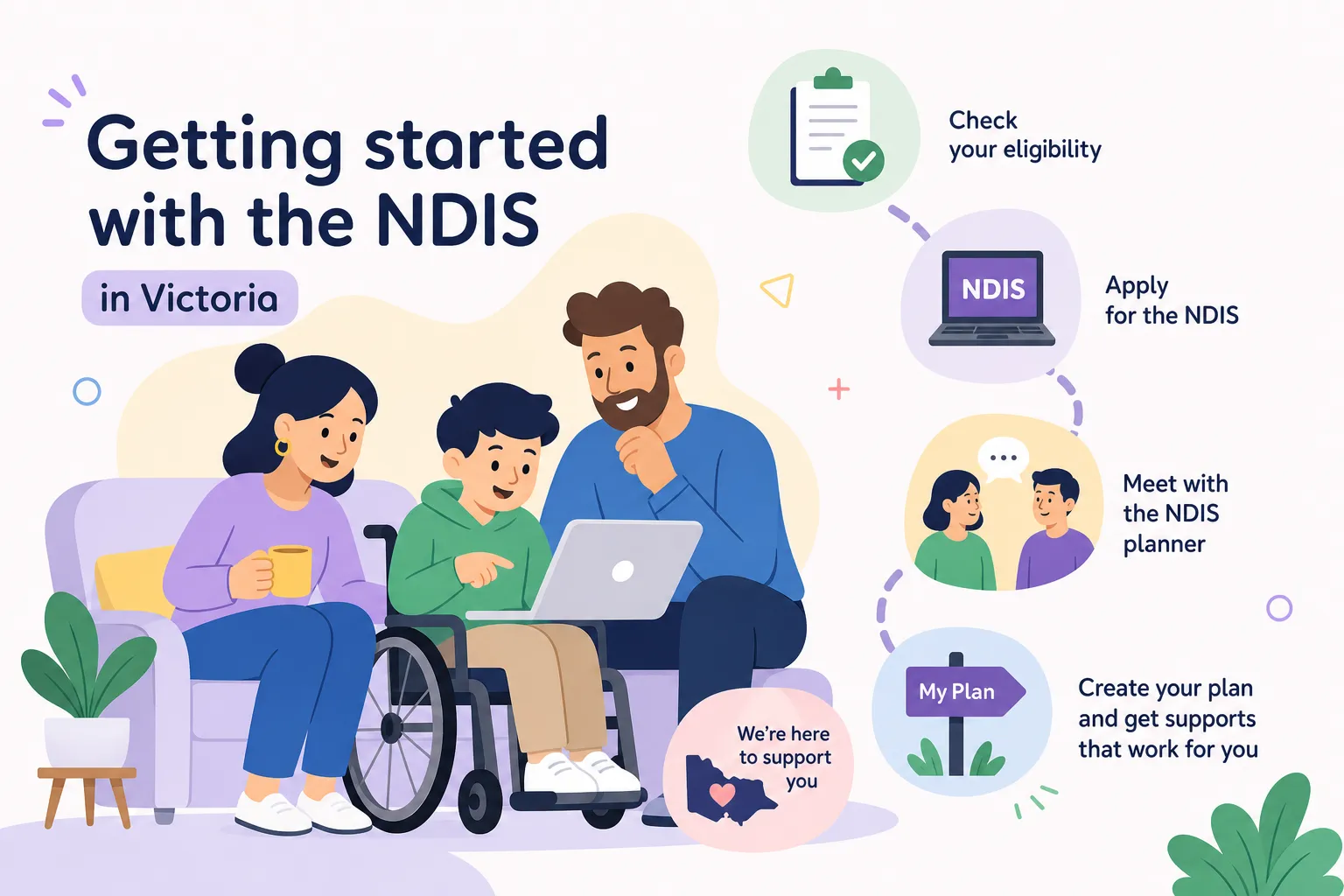
Navigating NDIS Victoria can feel overwhelming, but the process follows a clear sequence once you understand how the pieces fit together. Whether you’re a participant or family member starting from scratch, a support worker or volunteer who needs a Worker Screening Check, or an allied health professional helping someone else through the system, the path forward is knowable. At United Tribe, a registered Victorian NDIS provider, the team works alongside participants at every stage of this process and has seen firsthand what makes the difference between a plan that works and one that doesn’t. By the end of this guide, you’ll know whether you qualify, exactly how to apply, how to get cleared to work in the NDIS, and how to connect with a provider who actually fits your life.
NDIS Victoria: what the scheme actually covers
The NDIS operates as a national scheme, administered locally through the National Disability Insurance Agency (NDIA), with Victoria running its own network of Local Area Coordinators (LACs) and registered providers. Funding is allocated through an individual participant’s plan and tied to four support budgets: Core Supports, Capacity Building, Capital Supports, and Recurring Supports. Most participants use Core Supports for their day-to-day needs, and this budget is the most flexible of the four.
The four core support categories most Victorians use
Core Supports cover four practical areas that map to the NDIS’s official category groupings. Personal care and daily living covers help with showering, dressing and personal hygiene. Household tasks includes cleaning, meal preparation and maintaining a liveable home environment. Community participation supports attendance at social groups, community events and activities that build connections. Transport assistance helps participants get to medical appointments, community activities and other commitments. Because this budget is flexible, unused funding in one category (such as transport) can generally be redirected to another Core category (such as daily living), as long as the support is disability-related and approved under the plan.
How funded supports connect to your individual goals
The NDIS isn’t simply about getting tasks done. It funds supports that help participants work toward goals they’ve set in their plan, building independence, maintaining social connections, or managing their health day to day. The level and type of support a person receives is directly tied to what’s in their approved plan, which is why the planning conversation matters enormously. Going in prepared makes a real difference: bringing a list of your daily activities, current supports and unmet needs to that conversation gives the planner the functional detail they need to build a plan that actually reflects your life.
Who qualifies: NDIS eligibility in Victoria
Victoria does not have separate eligibility criteria. The NDIA applies national rules, assessing three things: age, residency and the nature of the disability, all of which must be met before an Access Request can be approved.
Age, residency and disability criteria explained
You must be under 65 at the time of application, and an Australian citizen, permanent resident, or Protected Special Category Visa holder. The disability itself must involve a permanent impairment, whether physical, intellectual, cognitive, neurological, sensory or psychosocial, that substantially reduces your ability to perform everyday activities independently. Eligibility is assessed on functional impact, not diagnosis alone. According to NDIA guidance, the agency makes an eligibility decision within 21 days of receiving a complete application, or within 14 days of receiving any further information it has requested.
The early intervention pathway and when you don’t need a confirmed diagnosis
The early intervention stream applies when early support is likely to reduce future disability-related needs. Children under 6 with a developmental delay may qualify even without a confirmed diagnosis, which is especially relevant for families who haven’t yet completed a diagnostic journey. Parents and carers can initiate an enquiry on behalf of a child or adult who lacks capacity to do so themselves. The starting point is a call to the NDIA on 1800 800 110.
How to access NDIS Victoria supports, step by step
The application process has a clear sequence. Understanding the order reduces the overwhelm, and both the NDIA and your LAC can assist at every stage, so you’re never figuring it out alone.
Making your Access Request and connecting with a Local Area Coordinator
Start by calling 1800 800 110 to make a verbal Access Request or request the form, then use the NDIS office-location search on the NDIS website to identify your local LAC and contact them before submitting. Participants aged 9 to 64 are generally connected with a LAC; children under 9 are usually supported by an early childhood partner. Brotherhood of St Laurence (1300 275 634) is one example of a Victorian LAC operating across several metropolitan areas, but the assigned organisation depends entirely on postcode, so always confirm through the NDIA or the NDIS office-location search.
What supporting evidence you need to include
The Access Request needs a report from a treating or allied health professional: a GP, paediatrician, psychologist, occupational therapist, or physiotherapist. That report must describe the impairment, its permanence, how it affects daily activities, and what supports or early intervention the person needs. The stronger and more functional the evidence, the smoother the decision process. Generic diagnostic letters rarely carry enough detail; a functional assessment that describes what the person can and cannot do, and how often they need assistance, is far more useful to the NDIA.
What happens after you apply
The NDIA has 21 days to make a decision or request further information. If approved, the next step is the planning conversation, where the participant discusses their goals, daily support needs, current services and preferred funding management arrangement. The LAC assists with setting up the myplace participant portal, which is used to manage the plan and service bookings once everything is in place.
How to find and engage the right Victorian provider
A provider that genuinely fits a participant’s life looks very different from one that simply has availability. The quality of the match between participant and provider determines whether a plan actually gets used or sits largely untouched.
What person-centred support actually looks like in practice
At United Tribe, support doesn’t begin with a generic roster. It starts with understanding a participant’s routines, preferences and goals before any schedule is designed. For one participant receiving personal care support, that meant adapting the timing and communication style of visits to align with their cultural routines and preference for privacy, rather than applying a standard approach. For another, community participation funding was used to help them rebuild social connections after a period of isolation, with a support worker accompanying them to local activities matched to their actual interests, not a predetermined programme. These examples reflect the team’s commitment to person-centred practice rather than a one-size-fits-all service model.
Choosing a registered Victorian provider and what to ask them
Before signing any service agreement, ask every provider the same set of questions: Are you registered with the NDIS Quality and Safeguards Commission? Do you operate in my area? How do you tailor supports to individual goals? What does your onboarding process look like for a new participant? United Tribe is a registered Victorian NDIS provider offering personal care, community participation, group and social support, household tasks and transport assistance across Victoria. Families and support coordinators are welcome to make direct contact for a no-obligation conversation about a participant’s needs.
The NDIS Worker Screening Check in Victoria
This section is for anyone who will be paid or engaged to deliver NDIS supports, not for participants. The Worker Screening Check is a non-negotiable compliance step that protects both participants and workers, and Victoria applies a strict no-clearance, no-start rule for anyone in a risk-assessed role with a registered provider.
Who needs a clearance and when
Employees, contractors, labour-hire workers, volunteers, students and key personnel engaged by a registered NDIS provider all need a current clearance before starting a risk-assessed role. Workers supporting self-managed participants are not automatically required to hold one, but participants can require it and can manage this through the self-managed participants portal on the NDIS Worker Screening Database. A clearance lasts five years with continuous monitoring throughout that period.
How to apply through Service Victoria, what ID you need and what it costs
The application is completed online through a Service Victoria account. You’ll need to complete the smartphone identity check, enter your employer’s NDIS Commission Employer ID, upload identity documents and pay the fee of $139.20. Identity documents must span three categories: one commencement-of-identity document (such as an Australian passport or birth certificate), one primary-use document (such as a Medicare card or driver licence), and one secondary-use document. At least one of the first two must include a photograph, and all documents must be originals. Your employer then verifies the application within 28 days. According to Service Victoria guidance, processing typically takes up to three weeks after verification, though in periods of high demand this can extend beyond this range.
Renewing, transferring and checking your clearance status
Renewal can be lodged during the 90 days before expiry through your Service Victoria account. The clearance is nationally portable: if you change employers, you share your Worker Screening ID with the new employer rather than applying again. Workers moving to Victoria from another state should contact the Victorian Worker Screening Unit about the correct transfer process rather than submitting a duplicate application. To check your current status, log into your Service Victoria account; employers verify clearances through the NDIS Commission’s screening system, where an active clearance shows as “Eligible to work: Yes.”
What families, support coordinators and allied health professionals need to know
Families, support coordinators and allied health teams are often the ones driving the process, particularly when a participant has communication support needs or is transitioning out of hospital. Early engagement with both the NDIA and a quality provider prevents gaps that are difficult to fill once they open up.
Supporting someone through the application and plan transition
Families play a direct role in gathering evidence and attending the planning conversation, where their input on daily support needs, frequency, risk and what happens without assistance adds detail the NDIA cannot gather from documents alone. Hospital discharge planners and allied health teams initiating NDIS access for a client should contact the NDIA or the relevant LAC as early as possible to avoid gaps in community support at the point of discharge. Support coordinators can assist with implementing an approved plan, helping participants set up service agreements and service bookings across multiple providers.
How to refer clients to United Tribe and make the most of their plan
United Tribe works collaboratively with support coordinators and allied health professionals to provide service proposals that align with a participant’s plan goals. Referrals from plan managers and support coordinators are welcome, and the team works within existing NDIS plans rather than asking families to start from scratch. Reach out to United Tribe directly to discuss a client’s support needs, request a referral pack, or arrange a provider introduction meeting.
Putting it all together
The NDIS Victoria process follows a clear path once you know the steps. Check eligibility against the age, residency and disability criteria, call 1800 800 110 to make your Access Request, gather functional evidence from relevant health professionals, and work with your assigned LAC toward an approved plan. For workers, the route is through Service Victoria with a $139.20 application fee and typical processing of up to three weeks after employer verification.
For families and professionals, the most important decision after plan approval is choosing a provider who will actually show up for the participant’s life, not just fill hours. A plan only changes someone’s daily reality when the provider behind it genuinely understands the person. That’s the commitment United Tribe brings to every participant across Victoria, and the team is ready to talk when you are. Get in touch to discuss a participant’s needs, ask about service availability in your area, or find out more about working with United Tribe as a referral partner.