
How independent living in Victoria works for NDIS participants: steps to plan, access and sustain supports
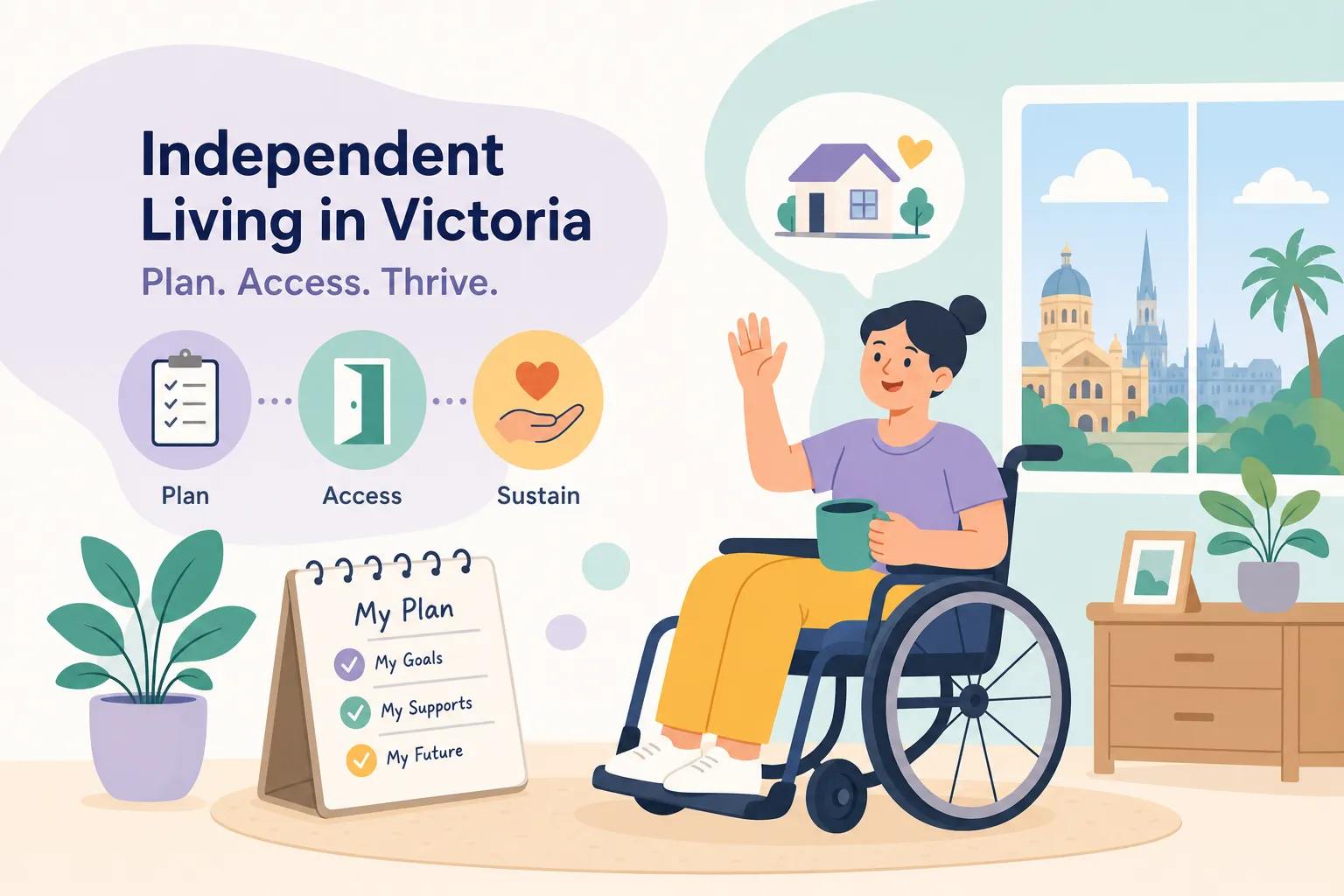
For most NDIS participants in Victoria, the goal isn’t independence in isolation. It’s independence with support that is consistent, dignified, and built to fit their actual life. That distinction matters more than it might seem, because the system that funds that support is genuinely complex, and the terminology doesn’t help. SIL, SDA, ILO, these terms get used as though they mean the same thing, and they don’t.
At United Tribe, we work alongside NDIS participants across Victoria every week, helping people navigate their support options and find arrangements that actually hold. One of the things we’ve noticed is how much confusion a single misunderstood acronym can cause when someone is trying to plan where and how they’ll live. A family assumes SIL includes rent. A participant thinks SDA is just another word for a group home. A support coordinator spends two months chasing evidence because nobody explained the process clearly upfront. These are common scenarios, and they’re avoidable.
This article covers what Supported Independent Living actually is, how it differs from Specialist Disability Accommodation and Individual Living Options, what the NDIA needs to see before approving funding, and what separates a good provider from a great one.
Independent living Victoria: what it actually means under the NDIS
Supported Independent Living, or SIL, is not a place. It’s a support package, funded under Core Supports as Assistance with Daily Life in accordance with NDIA guidelines, and it is delivered wherever a participant lives. That’s the misconception worth clearing up first, because many people approach the system expecting SIL to find them a home. SIL funds the help they receive inside that home. The housing itself is a separate question entirely.
In practice, SIL covers a substantial range of daily assistance: personal care such as showering and dressing, meal preparation, household routines, medication prompting, skill development, community access, and overnight or supervision support where assessed as necessary. The NDIA typically considers SIL where a participant requires eight or more hours of support per day, often with some form of overnight monitoring as well. It exists for people who need consistent, person-to-person assistance to stay safe, build capacity, and maintain a routine that works for them.
What SIL does not cover is equally important to understand: rent, utilities, groceries, transport costs, and personal expenses all sit outside NDIS SIL funding. The support and the housing are treated as separate. Missing this distinction early leads to planning mistakes that take months to untangle.
SIL, SDA, and ILO: which option actually fits
Think of it this way. SDA answers the question: “What kind of home do I need?” SIL answers: “What help do I need to live in that home?” And ILO asks something different again: “Who do I want to live with, and how should my support be arranged around me?”
Specialist Disability Accommodation (SDA) funds the specialised dwelling itself, designed for participants with extreme functional impairment or very high support needs requiring modified or purpose-built housing. A participant can receive SDA for the property and SIL for the daily assistance delivered there. Or they can receive SIL alone, in a private rental in Melbourne or regional Victoria, with no SDA involved at all. The NDIS treats these as related but distinct, and a participant can have one, both, or neither depending on their assessed needs.
Individual Living Options sit elsewhere on the spectrum. ILO suits participants who want a more personalised arrangement: living with a chosen housemate, with a host, or in their own home with flexible supports built around their preferences. ILO doesn’t require 24-hour onsite staffing and gives participants more direct control over how their living situation is shaped. The right fit between SIL, SDA, and ILO depends on functional needs, required support hours, and what the participant actually wants their daily life to look like.
The steps to get SIL funded in your NDIS plan
The NDIA does not approve SIL on request alone, and it doesn’t approve it because someone has a particular diagnosis. The assessment is needs-based: what can this person do independently, what do they need assistance with, how often, at what intensity, and why is SIL the most reasonable and necessary option given their goals and circumstances?
The process starts well before a planning meeting. Raise the request early with your support coordinator or Local Area Coordinator. Then work through the key evidence components:
OT assessment
Obtain an occupational therapist assessment of functional capacity that documents specific daily needs rather than simply stating a diagnosis. This should detail what the participant can and cannot do independently, and why support is required at the level proposed.
Roster of care
Build a detailed roster of care that maps support across a full week: tasks, hours, intensity, two-person support where relevant, overnight arrangements, and any safety or supervision risks. This is a critical document in the NDIA’s decision-making process.
Home and Living Supporting Evidence form
The completed Home and Living Supporting Evidence form, paired with relevant allied-health reports and the functional assessment, forms the core of your submission to the NDIA. Refer to current NDIA guidance on home and living supporting evidence when preparing this documentation.
Vague requests fail. An application that says “needs 24/7 care” without explaining what happens during each part of the day, what risks arise without support, and how the proposed arrangement connects to the participant’s goals will not produce the outcome you’re after. Specific evidence, clearly linked from functional need to daily task to personal goal, is what moves a SIL application forward. If SIL is declined, a participant can request the decision in writing and submit an internal review with stronger, more detailed evidence.
How day-to-day support makes independence real at home
There’s a version of support that does things for people and leaves it there. And then there’s a version that pays attention to what someone wants to do for themselves, and builds toward that. At United Tribe, the second version is the one we’re here to deliver.
Personalised core supports are built around each participant’s actual routine, goals, and preferences rather than a generic template. Personal care is delivered with dignity and consistency. Household assistance keeps a home manageable without overriding the tasks a participant wants to own themselves. Community participation support helps people get out, stay connected, and engage with their local area, whether that’s in Melbourne, Ballarat, Bendigo, or elsewhere across regional Victoria. Transport assistance means medical appointments, community activities, and social engagements don’t fall away because of logistics.
Consider a participant living in supported accommodation in regional Victoria. Each morning, a United Tribe support worker assists with personal care and meal preparation. Each week, the same worker is there for a community group and a medical appointment. The consistency of staffing means the participant isn’t re-explaining their preferences to a rotating cast of unfamiliar faces. Over time, they take on more household tasks independently, not because the support stepped back, but because it was designed from the start to build capacity rather than dependency.
“Our goal isn’t to do things for people indefinitely. It’s to help them figure out what they want to do for themselves.”
Finding SIL providers in Victoria: questions that separate good from great
To find registered SIL providers in Victoria, start with the NDIS Provider Finder, filtered by Supported Independent Living and your suburb or postcode. For regional Victoria, search nearby towns as well, because providers often cover a broader area than one location suggests. Cross-verify registration on the NDIS Quality and Safeguards Commission’s public provider register. From 1 July 2026, SIL providers must hold formal NDIS Commission registration under registration group 0138, so confirming current registration status is a non-negotiable step. For vacancy searches, the Summer Foundation’s Housing Hub lists SIL and SDA vacancies by location and support needs and is worth checking alongside direct provider enquiries.
When you speak with a provider, the questions that reveal how they actually operate are more useful than generic policy discussions. Ask to see an anonymised roster for someone with similar needs. Ask what happens when two staff call in sick at the same time. Ask how many workers have left in the past year. Ask about the most recent complaint or serious incident and what changed as a result. A provider who answers these directly, without deflecting to policy documents or becoming defensive, is demonstrating exactly the kind of transparency you need. A provider who hedges, rushes you toward signing, or refuses to share documentation is showing you something equally important.
Also ask specifically about shared versus individual supports, overnight arrangements, housemate compatibility, and how exit from the service works if circumstances change. These details rarely come up in a brochure but make an enormous difference to daily life.
What families and support coordinators should expect through the process
Support coordinators carry significant responsibility in a SIL application: gathering functional evidence, preparing the roster of care, coordinating allied-health input, and attending planning meetings with clear, well-structured documentation. Families often assume the NDIA will navigate toward the right arrangement; in practice, a well-prepared coordinator can materially improve application quality and outcomes, particularly in complex cases or where SIL has previously been declined.
For families and allied-health professionals making referrals, a reputable provider will explain clearly what is funded through SIL, what the participant is responsible for separately, and how support plans are developed with genuine input from the participant and those they choose to involve. Progress should be reviewed regularly, and the participant’s goals should remain central to how support is shaped over time.
At United Tribe, enquiries from support coordinators, LACs, hospitals, and families are always welcome. If you are supporting an NDIS participant in Victoria who is exploring independent living options, get in touch with the United Tribe team to discuss their support needs and how we can help.
Getting started with independent living Victoria: the right support makes the difference
Independent living in Victoria is achievable with the right information, the right evidence, and a provider who understands that support is meant to serve the person, not the other way around. SIL is a support, not a housing type. Eligibility is needs-based and evidence-driven. The difference between a good outcome and a frustrating one often comes down to how clearly and specifically that evidence is prepared and presented.
United Tribe is a Victorian NDIS provider built around personalised core supports: personal care, household assistance, community participation, and transport, all delivered with the consistency that lets people get on with their lives. If you or someone you support is ready to explore what independent living Victoria could look like in practice, reach out to the United Tribe team. No pressure. Just a conversation to start from.