
NDIS Transport Assistance: How It Works & What It Covers
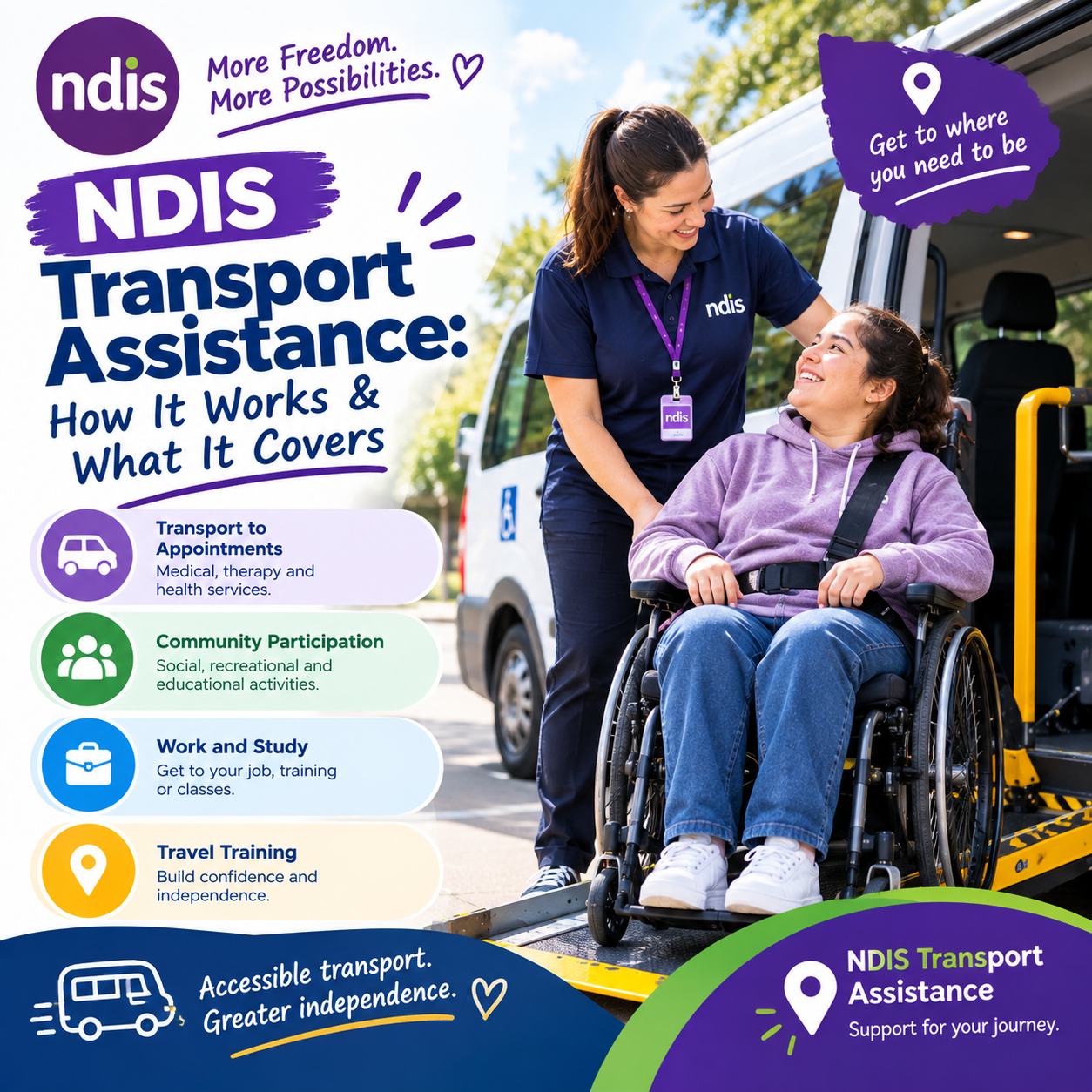
Getting to work, appointments or a weekly class sounds simple. But if disability makes public transport hard, every trip can turn into a challenge. NDIS transport support helps close that gap. In short, the NDIS can fund transport when your disability stops you from using public transport without substantial difficulty. That funding can cover taxis, rideshare, community transport or a support worker who drives you. This guide explains how NDIS transport funding works, what it covers and how to get the most from it in Victoria.
What Is NDIS Transport Assistance?
NDIS transport assistance is support that helps participants travel to the places they need to go. It focuses on trips linked to your goals, such as work, study, therapy and community activities.
Transport support can look different for each person. Some participants receive funds to pay for taxis or rideshare. Others travel with a support worker who drives them and helps at the destination.
For example, a participant might need a driver to reach their weekly art class. The support worker then stays to help them settle in and join the group. That one trip supports both independence and social connection.
At UnitedTribe, our transport assistance service helps participants across Victoria get where they need to go, safely and on time.
Who Is Eligible for NDIS Transport Funding?
The NDIA looks at your situation during your planning meeting. It considers questions such as:
You may receive NDIS transport funding if your disability means you cannot use public transport without substantial difficulty. The support must also be reasonable and necessary for your goals.
- Can you use buses, trams or trains safely on your own?
- Do you need help to plan a route or manage changes?
- Does your disability cause fatigue, anxiety or mobility issues when travelling?
- Which goals in your plan depend on regular travel?
Be specific when you describe your needs. Instead of saying “travel is hard”, explain what happens. For instance, “I get lost when a tram route changes” gives the planner a clear picture.
You can read the official rules on the NDIS website. Your support coordinator or local area coordinator can also help you prepare.
What Does NDIS Transport Cover?
NDIS transport usually covers travel that helps you take part in daily life and work towards your goals. It does not cover everyday costs that everyone has, regardless of disability.
| Usually covered | Usually not covered |
|---|---|
| Taxi or rideshare trips linked to your goals | Buying a car |
| Community transport services | Everyday fuel and car costs |
| A support worker driving you to activities | Public transport fares that anyone would pay |
| Travel to work, study or volunteering | Trips unrelated to your disability needs |
Vehicle modifications sit in a different part of your plan. These fall under capital supports, not your transport budget.
Every plan is different, so always check your plan document. If something is unclear, ask your plan manager or support coordinator before you spend the funds.
How NDIS Transport Funding Works in Your Plan
Transport funding sits in the Core Supports budget of your plan, under the Transport category. How you access it depends on your plan and the way the NDIA sets up your payments.
Some participants receive transport funds as regular payments into their bank account. Others use the funding to pay providers directly. Your plan will show which option applies to you.
Here are a few practical tips:
- Track every trip. Keep receipts and a simple log of where you went and why.
- Budget across the year. Divide your funding by the weeks in your plan, so you do not run short.
- Plan regular trips first. Lock in work, therapy and study travel before one-off outings.
- Review before your plan reassessment. If your funds ran out early, bring your records as evidence.
The current funding amounts and levels can change. [ADD FIGURE: check the latest NDIS transport funding levels before publishing.]
Support Worker Transport vs Taxi Funding
A support worker can drive you and stay with you during an activity, while taxi funding only covers the ride. The right choice depends on how much help you need once you arrive.
Support worker transport works well if you:
- Need help to enter a building, find a room or settle in.
- Want company and support during the activity itself.
- Feel anxious with unfamiliar drivers.
Taxi or rideshare funding works well if you:
- Can manage the activity on your own once you arrive.
- Want flexible, on-demand travel.
- Travel short distances on a regular basis.
When a support worker drives you, the provider can claim the travel costs under the NDIS Pricing Arrangements and Price Limits. Ask your provider to explain these costs upfront, so nothing surprises you.
Many participants combine both. They use taxis for simple trips and a support worker for activities like community participation or social outings.
How Transport Assistance Builds Independence
Good transport support does more than get you from A to B. It builds the confidence and skills you need to travel more independently over time.
A support worker can help you practise a route until it feels familiar. They can show you how to use a myki card, read a timetable or plan for delays. Over time, many participants take on more of the journey themselves.
Transport also keeps people connected. Regular trips to see friends or join group and social activities can reduce isolation. For many families, reliable transport also gives carers a much-needed break.
For general accessibility information on trains, trams and buses, visit Public Transport Victoria.
Frequently Asked Questions
Does NDIS pay for taxis?
Yes, the NDIS can fund taxi or rideshare trips if your disability makes public transport difficult. The trips must be reasonable, necessary and linked to your plan goals. Check your plan to see your transport funding, and keep receipts so you can track your spending throughout the year.
Can a support worker drive me to appointments?
Yes. A support worker can drive you to appointments, work or community activities. They can also stay and help during the visit. The provider claims travel costs under the NDIS price guide, so ask about these costs before you book. This option suits people who need help at the destination.
Does the NDIS pay for a car?
No, the NDIS generally does not pay to buy a car, as this is an everyday cost. However, the NDIS may fund vehicle modifications under capital supports. These modifications help you drive or travel safely. You usually need an assessment from an occupational therapist or driving specialist first.
What happens if I run out of NDIS transport funding?
Talk to your support coordinator or plan manager as soon as possible. They can help you review your budget and spending. If your needs have changed, you can request a plan reassessment. Bring trip records and receipts to show why you need more transport support.
How do I get transport support from UnitedTribe?
You can submit an online referral or contact our team directly. Participants, families, carers and support coordinators can all make a referral. We aim to respond within one business day. Then we talk through your travel needs, routines and goals before we arrange support.
Get Reliable NDIS Transport Support in Victoria
The right transport support helps you reach work, appointments and the people who matter to you. It also builds the confidence to do more on your own terms.
At UnitedTribe, we match you with support workers who understand your routine and goals. Ready to get started? Submit an online referral or contact our team for a friendly chat today.