
7 practical ways NDIS participants can be independent at home and in the community
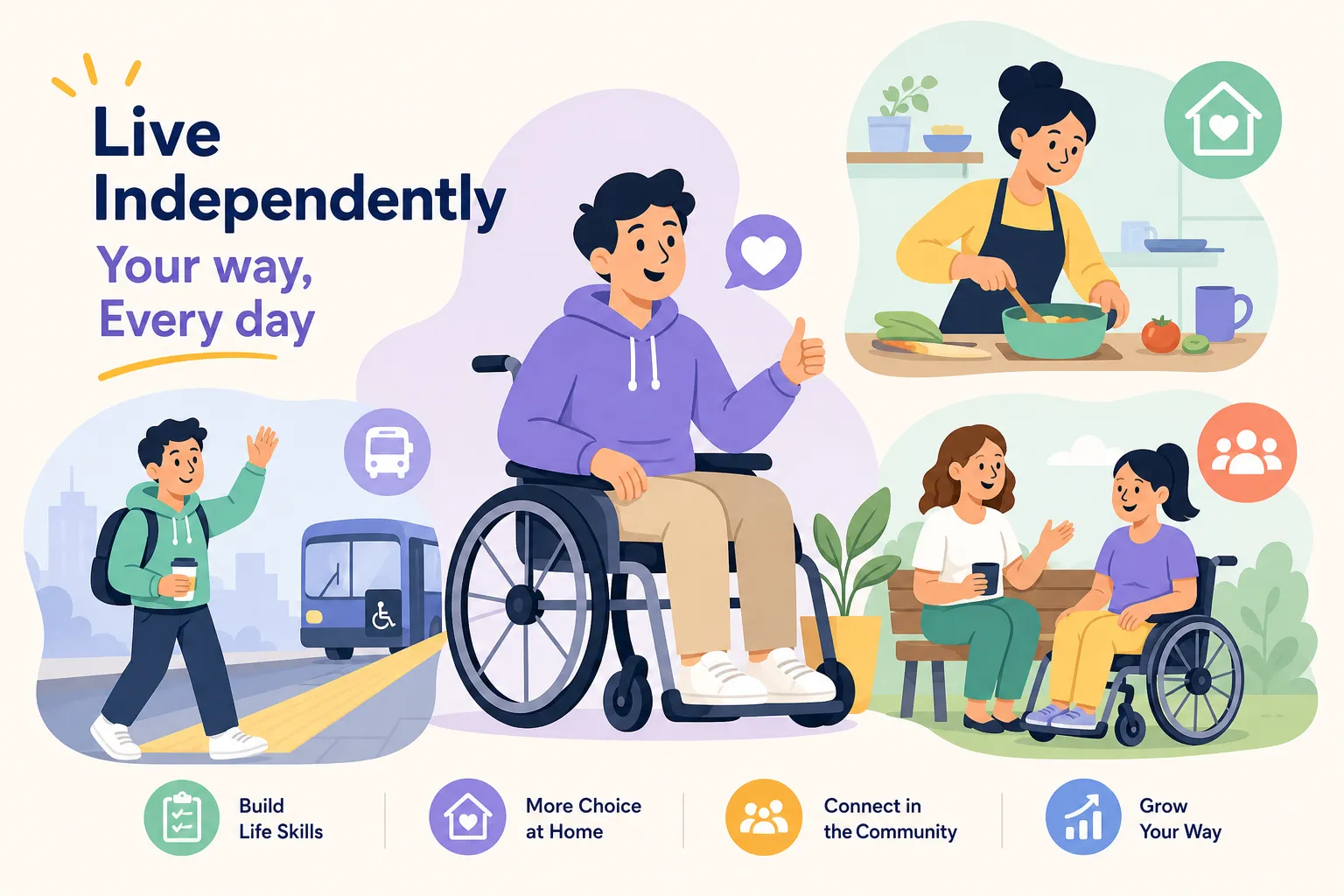
Picture this: a few months ago, Marcus used to wait for his support worker to arrive before he’d even think about breakfast. Not because he couldn’t make toast, but because that’s just how his mornings had always gone. Then, gradually, things shifted. He started laying out his bread and spreads the night before. He learned the bus timetable for the route to the local pool. He joined a Tuesday morning group at the community centre. None of it was dramatic. There was no single breakthrough moment. Just small, steady wins stacking up into something that felt a lot like a life he was actually running.
For many NDIS participants, the idea of wanting to be independent can feel both genuinely exciting and quietly terrifying at the same time. That’s completely understandable. But here’s what the team at United Tribe, a Victorian NDIS provider, has seen again and again after walking alongside participants through exactly this kind of journey: independence isn’t a finish line you cross. It’s built one small, real decision at a time. These seven practical strategies will show you how to be independent in the ways that matter most to you.
What independence actually means for NDIS participants
The word “independence” is worth reframing, because a lot of people quietly give up before they begin based on a misunderstanding. For NDIS participants, choosing to be independent doesn’t mean doing everything without support. It means having genuine control over your choices, your routines and your life. The support you use is a tool. It doesn’t cancel out your autonomy; it can actually expand it.
The most common barriers aren’t physical. They’re things like low confidence after years of relying heavily on others, not knowing where to start, fear of making mistakes, and the belief that asking for help means you’ve gone backwards. These are observed patterns that emerge consistently in disability support work, not unique to any one person, which is why it’s worth naming them directly.
Why small, incremental goals beat big leaps
Independence is built in layers, not all at once. What tends to emerge, again and again, is that accumulating daily evidence of your own capability builds genuine self-reliance far more effectively than setting one enormous goal that collapses under pressure. Pick one area: a morning routine, a household task, one community outing. Get that working first. Then build from there.
The goal for the first week isn’t to prove you can do everything. It’s to prove to yourself that you can do one thing. That evidence compounds, and it’s yours, not someone else’s reassurance.
How to know where you’re starting from
Take an honest, judgment-free look at your current situation. Which tasks do you currently rely on others for that you’d genuinely like to try yourself? What would safety need to look like in those tasks? This isn’t a test. It’s just a baseline, a starting point, not a measure of your worth or capability. Write it down if that helps. Seeing it on paper makes it less abstract and more manageable.
Ways 1 and 2: How to be independent at home through personal care
Personal care is where many participants begin their independence journey, and for good reason. It’s daily, it’s personal, and confidence built here has a way of spilling into every other area of life.
Way 1: Establish a consistent daily care routine
A predictable routine is genuinely one of the most powerful independence tools available. When you know exactly what comes next, you spend less mental energy on decisions and more on actually completing tasks. Start small: pick just one part of your morning routine, perhaps getting dressed or washing your face, and do it in the same order, at the same time, every day.
Checklists and visual prompts can reduce the need for prompting from others, which is often one of the first meaningful shifts participants notice. You’re not waiting to be reminded; you’re following your own system. This approach draws on well-established active-support principles used by occupational therapists and disability support practitioners. Add steps gradually over days and weeks, rather than overhauling everything at once.
Way 2: Use assistive equipment to do more on your own
The right piece of equipment can genuinely be the difference between needing help and not needing it. Grab rails in the bathroom, a shower chair, long-handled dressing aids, adapted utensils at the table: these aren’t signs of limitation. They’re practical tools that expand what you can do independently and safely.
NDIS funding can often cover assistive technology and daily living equipment, though eligibility for mid- and high-cost items typically requires an assessment from a qualified occupational therapist. Your support coordinator or an OT can help identify which items would best support your specific goals and assist with including them in your plan. It’s worth having that conversation sooner rather than later.
Ways 3 and 4: Taking charge of household tasks without the overwhelm
Household management can feel like a very large category, and it’s easy to look at everything that needs doing and feel like you have to tackle it all or none of it. That’s not how building independence works.
Way 3: Break tasks into steps and rotate them gradually
Start with a household task inventory: write down every regular task your home requires. Then pick one. Break it into the smallest possible steps. If cooking feels too big, start with making toast. Once toast is reliable, move to scrambled eggs. Once that’s solid, try a simple meal. This isn’t a shortcut; it’s the actual method.
Rotating tasks in gradually over weeks means you build a full set of household skills without burning out in week one. Small, consistent wins outperform big, sporadic efforts every time, and over time, this graded approach is how you gain independence skills that genuinely stick. Gaining financial independence over daily decisions, like choosing what to buy at the shops or managing a simple weekly budget, can often follow naturally from this kind of household confidence.
Way 4: Reduce safety risks so you can do more with confidence
Safety concerns are often the real reason participants, and their families, hold back from trying new tasks. Addressing those concerns directly is far more useful than avoiding the task altogether. Keep pathways clear, use non-slip mats in wet areas, keep emergency contacts visible and accessible, and consider periodic check-ins with a support worker rather than constant supervision.
Safety planning isn’t a reason to avoid building independence; it’s a core part of a good independence plan. When risks are thought through and managed, you can take on more with confidence rather than caution.
Ways 5 and 6: How to be independent in the community
Being self-sufficient at home is one important piece of the picture. But getting out into your community, making connections, and taking part in everyday life is where things get genuinely fuller.
Way 5: Plan your transport before you need it
For many participants, transport is the sticking point between home and community. The practical answer is preparation. Research accessible routes in advance, use apps to check timetables and stop accessibility, and consider trying public transport with a support worker before going solo. Melbourne’s public transport network includes low-floor trams, accessible buses and level-access stops, and V/Line regional services offer accessible spaces and assistance for longer trips, Public Transport Victoria publishes journey planner and accessibility information to help you plan your route.
If public transport isn’t a realistic option yet, NDIS-funded transport assistance covers taxis and other commercial vehicles for participants who meet eligibility criteria. The Companion Card and Access Travel Pass are also worth exploring, eligibility differs between these schemes, so it’s worth checking the relevant state government pages for current criteria. The goal isn’t to use one particular mode of transport; it’s to get where you want to go, safely and reliably, with a fallback plan in place if something goes wrong.
Way 6: Find community activities that match your interests
Community participation matters for emotional independence and overall wellbeing in ways that go beyond logistics. Regular involvement in local activities builds social connection, a sense of purpose, and the practical habit of making decisions in real-world settings. All of that reinforces autonomy in ways that staying home simply can’t.
Start with one regular activity that genuinely interests you. Group activities are often a gentler entry point, lower pressure, with connection built in. NDIS funding for community participation can open doors here: a support worker can accompany you while you build confidence, and over time, you may find you need less support to participate. Local councils and community centres across Victoria also run low-cost and free programmes; the Disability Gateway is a useful starting point for finding what’s available near you.
Way 7: Involving your support team and family the right way
Autonomy doesn’t grow in isolation. It grows with the right people around you, people who support your goals rather than manage them for you. This distinction matters more than most people realise.
How to involve family and carers without losing control of your goals
Family members who care deeply can sometimes, without meaning to, do too much. When someone else steps in before you’ve had the chance to try, independence gets slower, not faster. The most useful shift is framing: involve family in your goal-setting conversations so they understand what you’re working toward, and be specific about where you want to try things yourself.
A support coordinator can be genuinely valuable here, helping to facilitate those conversations and translate your goals into a plan that everyone understands. The NDIS places participant choice and control at the centre of every plan for exactly this reason, Local Area Coordinators (LACs) and support coordinators each play a distinct role in helping participants exercise that choice and put their plans into action. Your support team’s role is to build your capability, not to replace it.
What a person-centred independence plan looks like in practice
At United Tribe, this kind of planning starts with a real conversation, not a form. What are your actual goals? What does your current routine look like? What matters to you about how you spend your days? To illustrate what this looks like in practice: for one participant in regional Victoria who wanted to catch the bus to the local pool independently, the process involved building a familiar transport routine, practising the route with support, identifying accessible stops, and establishing a backup plan for days when things didn’t go to schedule. It took a few weeks. It worked.
The supports built into a plan, personal care, getting around, being part of the community, look very different when they’re shaped around a person’s actual goals. They’re not about creating dependency. When done well, they’re tools for growing real autonomy, delivered at a pace that actually holds.
Your next step toward a more self-reliant life
Marcus is an example of what steady progress can look like. He still uses support. He still has days where things don’t go to plan. But he makes his own breakfast, catches his own bus, and shows up to his Tuesday group without anyone organising it for him. That’s not a small thing. And it didn’t start with a big leap; it started with deciding to lay out his bread and spreads the night before.
The journey toward greater autonomy looks different for everyone, and that’s not a flaw in the process. It’s just reality. What stays consistent is the method: one area, one goal, one small win, repeated until it’s yours. NDIS participants in Victoria have access to funding, supports and providers who can walk alongside them through exactly this kind of progress. These independence tips aren’t a programme to complete, they’re a set of practical starting points you can adapt to your own life.
If you’re ready to be independent in the ways that matter most to you, the team at United Tribe would love to start that conversation. Reach out to us directly to talk through your goals and what support might look like for your situation.