
10 Signs of a Great Disability Support Worker: A Checklist for Families and Support Coordinators
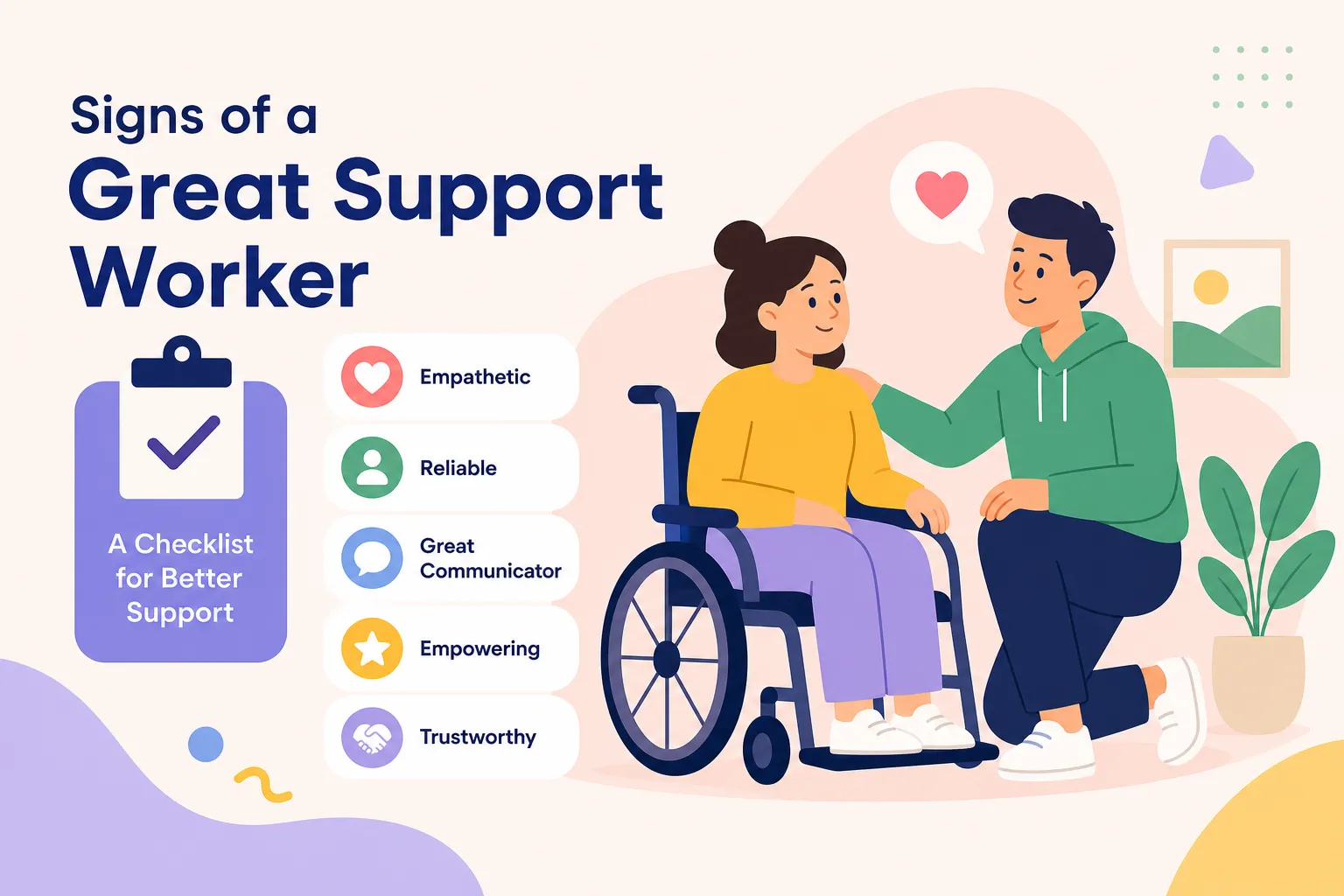
Most families and support coordinators can tell when something feels off with a disability support worker, but “something feels off” is not a framework you can act on. Without clear, observable criteria, it is easy to settle for adequate when excellent is what your family member actually needs and deserves.
The stakes are real. A poor match disrupts daily routines, affects safety, and chips away at a participant’s confidence and wellbeing. Good providers treat worker quality as something you can assess and verify, not just sense, and that approach is worth understanding. United Tribe, a Victoria-based NDIS disability support provider, is one example of a team that has built structured processes around exactly this challenge.
This article gives you a practical, checklist-style breakdown of the 10 signs that separate a genuinely great disability support worker from a merely adequate one. The signs reflect the NDIS Quality and Safeguarding Framework and what families actually observe day to day. No vague platitudes. Specific, observable behaviours you can look for from day one.
What a disability support worker actually does
Before you can evaluate quality, you need a clear picture of the role. Families who understand the full scope of disability support work are far better placed to judge whether a worker is doing it well.
The everyday tasks that make up the role
Core disability support worker duties cover a wide range: personal care such as showering, dressing, and grooming; household tasks including cleaning, meal preparation, and laundry; community participation such as social outings and appointments; and transport assistance to help participants stay connected. In practice, a single shift can move across all of these categories. What matters is that the tasks follow the participant’s NDIS support plan, not the worker’s preference or convenience.
Why the role is more than practical assistance
A great NDIS support worker is not simply completing a task list. They are actively supporting skill development, building confidence, and reducing isolation. The emotional and relational dimensions of the role are just as significant as the practical ones. Families who underestimate this tend to accept a disability carer who shows up on time and does the tasks, without noticing that the participant is not growing, engaging, or feeling genuinely supported.
Qualifications and checks to verify before day one
Families and support coordinators have every right to ask for evidence of qualifications and current checks before a worker starts. Think of it as due diligence, not distrust. Asking these questions is part of being a good advocate for the participant.
Support worker qualifications Australia: training pathways and credentials
Certificate III in Individual Support (Disability) is the standard entry-level qualification across the sector and the most common outcome of a recognised support worker training course in Australia. Certificate IV in Disability is common in more advanced or specialist roles. Most employers also require current first aid and CPR certificates. These are the baseline support worker qualifications Australia’s NDIS providers generally expect, but formal credentials alone are not sufficient, demonstrated experience and a genuine understanding of person-centred practice matter equally. A credential without that understanding is not enough.
Mandatory checks: what to confirm and why
In Victorian NDIS settings, three checks are most relevant. The NDIS Worker Screening Clearance is required for risk-assessed roles with registered providers. A National Police Check is a standard employer requirement. A Working With Children Check is necessary if the participant is a child or the role involves child-related settings. A current clearance means an active, valid check, not one that is no longer current or has lapsed without renewal. Families can and should confirm this directly with the provider before a worker begins.
Signs 1, 5: Communication, respect, and consistency
The first five signs show up in everyday interactions. These are the qualities participants and families notice most clearly but often struggle to put into words.
1. They communicate clearly and proactively
A great disability support worker keeps families and support coordinators informed without needing to be prompted. They raise concerns early, report changes in a participant’s condition or mood, and do not leave families guessing between shifts. Clear communication is not just a professional courtesy; it is a safety practice that protects the participant.
2. They treat the participant with dignity during personal care
Personal care requires discretion, patience, and consistent respect for privacy. Watch for a worker who explains what they are about to do, gives the participant choices where possible, and never rushes through intimate tasks. How someone behaves during personal care reveals their actual attitude toward the person they support, far more than any interview answer will.
3. They listen to the participant, not just the family
A strong NDIS support worker takes direction from the participant’s own preferences, not just instructions passed through families or coordinators. They check in regularly, adjust their approach based on feedback, and make the participant feel heard. This is the heart of person-centred practice, and it is easy to observe within the first few visits.
4. They show up consistently and on time
Reliability sounds basic, but it has a direct impact on a participant’s routine, mental health, and trust in their support system. A worker who is consistently punctual and communicates promptly when unavoidable changes arise demonstrates genuine professionalism. Patterns of lateness or unexplained absences are early warning signs worth taking seriously, not excusing.
5. They adapt to the participant’s preferences and pace
No two participants are the same, and a great disability support worker does not apply a one-size approach. They pick up on individual preferences, from how someone likes their morning routine structured to which topics they enjoy talking about, and adjust naturally without needing to be retrained each visit. This adaptability is one of the clearest signs of an experienced and genuinely engaged worker.
Signs 6, 10: Goal focus, safety, and professional practice
The second five signs relate to professional standards and how a worker operates within the broader NDIS system. These matter most to support coordinators but are equally valuable for families to understand and actively observe.
6. They work toward the participant’s NDIS goals
A great worker knows what is in the participant’s support plan and actively works toward those goals, not around them. They support skill development, encourage independence, and flag when a participant is making progress or when a goal may need revisiting. If a worker has never looked at the support plan, that is a serious problem worth addressing immediately.
7. They practise safety consistently, not just when observed
Safe manual handling, correct use of equipment, incident reporting, and medication prompting (when trained and authorised) should be consistent practices, not a performance for supervisors. Observe whether a worker follows safe practices during ordinary shifts, not just introductory visits or supervisor-accompanied sessions.
8. They document accurately and without prompting
Shift notes and incident reports are not optional extras; they are part of the NDIS support structure. A great support worker records what happened during a shift clearly and factually, without gaps or embellishment. Accurate documentation protects the participant and contributes directly to plan reviews and quality assessments.
9. They work collaboratively with families and allied health
Quality support workers do not operate in isolation. They take direction from support coordinators, communicate respectfully with families, and follow guidance from allied health professionals such as occupational therapists or physiotherapists. A collaborative worker makes the whole support team more effective, and that benefit flows directly to the participant.
10. They are honest about what they can and cannot do
A great disability support worker knows their limits and says so. They do not attempt tasks they are not trained for, they ask for help when a situation is outside their scope, and they do not overpromise to keep a participant or family happy. Honesty about capability is a sign of genuine professionalism, not weakness, and it protects everyone involved.
How to trial a new worker the right way
Knowing the signs is one thing. Structuring the early period with a new worker so you can actually observe them is another. A good trial period is active, not passive.
What a proper meet-and-greet should include
A meet-and-greet is not just an introduction; it is an assessment opportunity. Watch for whether the worker speaks directly to the participant, asks about their preferences and goals, and listens without interrupting. Do they ask practical, thoughtful questions about the role, or just nod along? Providers with structured onboarding processes build this evaluation step into their standard process as a matter of course. That structure makes a meaningful difference to how quickly the right fit is confirmed.
Questions to ask and early red flags to watch for
During the initial meeting and first few shifts, ask direct questions: how would you handle a participant refusing support today? What would you do if you noticed a change in their health or mood? How do you balance encouraging independence with providing enough support? These questions reveal whether a worker thinks in terms of the participant’s experience or just the task in front of them.
Early red flags include dismissing a participant’s stated preferences, avoiding or delaying documentation, and becoming defensive when feedback is offered. The first few months of a new placement are the most revealing, sector guidance commonly recommends a structured review at the midpoint of a probationary period. Treat that window as an active assessment, not a polite grace period. A worker who is genuinely excellent will welcome clear feedback because they are focused on getting the support right for the participant.
How United Tribe makes finding great support easier in Victoria
Those 10 signs are only useful if the provider you are working with is actively building for them. For Victorian families and support coordinators navigating the NDIS, working with a provider that takes the matching process seriously removes a significant layer of stress and uncertainty.
Person-centred Core Supports and what that looks like in practice
United Tribe provides personal care, household tasks, community participation, and transport assistance across Victoria, structured around each participant’s individual goals and routines. The aim is to understand a participant’s preferences and support plan before a worker arrives, which reduces the trial-and-error period that families often dread when starting with a new provider.
Getting started: meet-and-greet process and requesting services
United Tribe’s meet-and-greet process gives participants and families a structured opportunity to meet their support worker before committing to regular services. It is designed so that both the participant and the family can assess the 10 signs covered in this article from the very first interaction. Victorian families, support coordinators, and plan managers can reach out to United Tribe directly to request services or learn more about how the matching process works. The team is experienced in guiding people through the process, including families who are new to the NDIS and unsure where to start.
A checklist you can actually use
A great disability support worker is not a mystery. They show up in observable, specific ways that families and support coordinators can actively look for: strong relational qualities like respectful communication, consistency, and genuine person-centred focus, alongside professional practices like goal-aligned support, safe work habits, accurate documentation, and collaborative teamwork.
Verifying qualifications and current checks before day one is non-negotiable. That step is not awkward; it is responsible advocacy for the participant. Once a worker starts, use the trial period as an active assessment, not a formality.
Do not settle for adequate when you have a clear picture of what excellent looks like. If you are a Victorian family or support coordinator looking for a provider that builds quality into the process from the very first conversation, get in touch with the United Tribe team. Finding the right disability support worker is too important to approach without a clear process and the right partner beside you.
Looking for NDIS support in Melbourne?
Contact UnitedTribe or submit an online referral to discuss the support you need.